
Internal tools and apps
Purpose-built interfaces for customer operations, staff workflows, field work, approvals, inventory, service delivery, and recurring decisions.
03 / Systems
We turn scattered workflows, tools, and information into software, integrations, automation, dashboards, data pipelines, and practical AI systems that support real work.
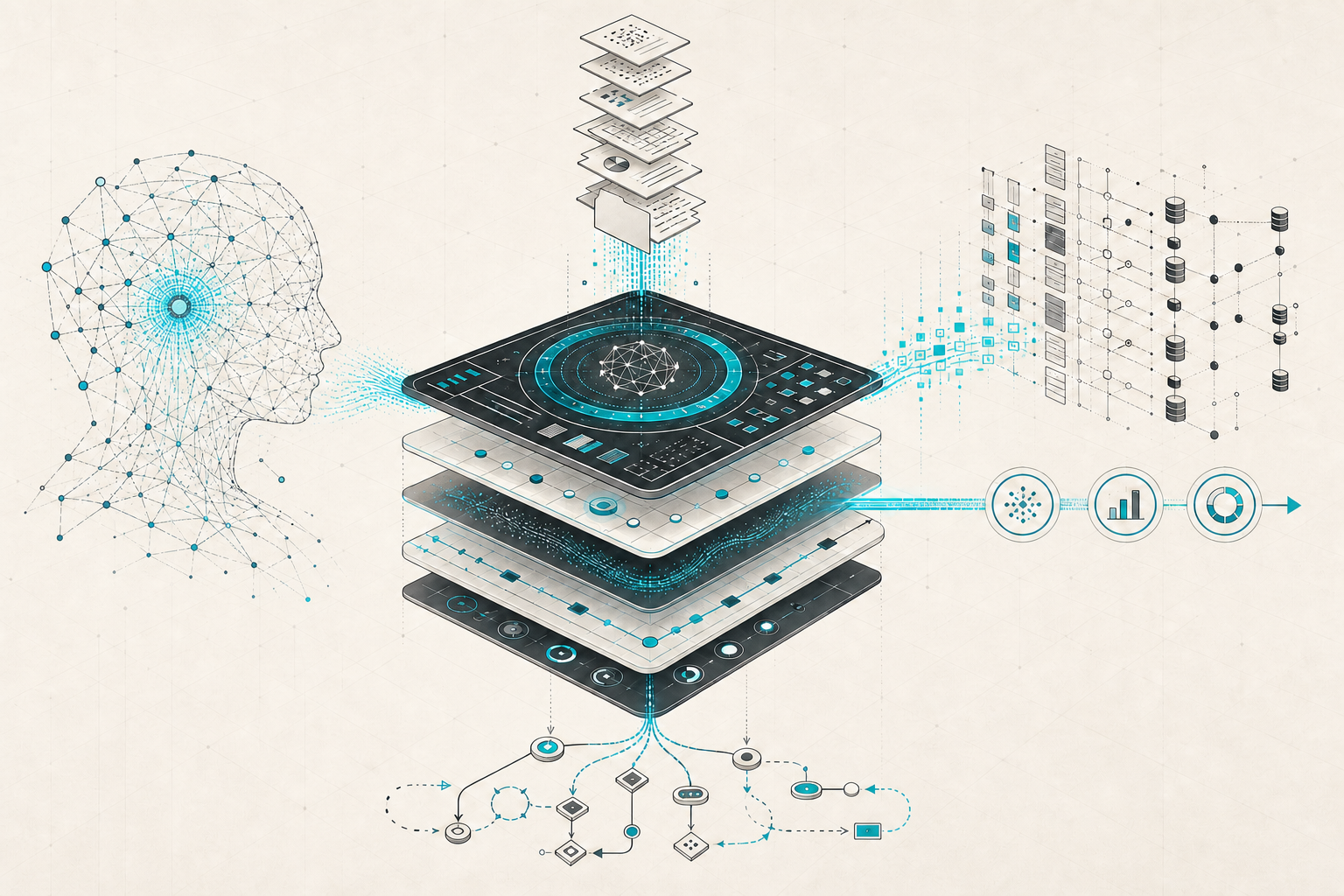
Knowledge, follow-up, and reconciliation depend on memory. The first move is not AI. It is making the important workflow visible and repeatable.
Purpose-built interfaces for customer operations, staff workflows, field work, approvals, inventory, service delivery, and recurring decisions.
Connect CRM, booking, POS, spreadsheets, databases, accounting, communications, and external APIs into a cleaner operating picture.
Remove repetitive handoffs, duplicate entry, missed follow-up, and preventable reconciliation while keeping exceptions visible to people.
Move useful information into trusted structures, then present the signals that teams need to understand performance and act.
Apply AI where the surrounding data, workflow, and accountability make it useful: research, classification, drafting, routing, analysis, and decision support.
Design and engineer customer-facing platforms, mobile apps, and new software products when the opportunity extends beyond the internal operation.
Map the actual workflow, the tools, the people, the information, and the moments where work slows or disappears.
Define the constraint, the desired operating behavior, the owner, and the evidence that would make the change useful.
Create the smallest coherent system that can improve the real workflow without pretending uncertainty has vanished.
Integrate the new layer with the systems and people around it so information can move without fragmenting responsibility.
Measure behavior, expose exceptions, and use operational evidence to decide what should become more automated or intelligent next.
We begin with a workflow and the decision it needs to support, then choose the software, integrations, automation, data, or AI that fits.
When an important workflow cannot be handled reliably by the current tools or a suitable existing product. We assess the constraints and integration options before deciding whether a custom build is justified.
No. A dependable integration, a clear data model, or a simple automation may solve the problem. AI is useful where its outputs can be evaluated and uncertainty, permissions, and human review can be managed.
Describe the workflow, the tools involved, where work slows down, and what a better result would look like. An outline is enough to begin; access to systems or sensitive information is agreed only when needed.
Bring the bottleneck, the spreadsheet, the manual handoff, the product idea, or the mess between systems. We will help turn it into a tractable operating question.